Between Eli’s appointments, we dose him at home with foods that will condition his body for the eventual introduction of his allergenic foods. They do this because they are foods with biosimilar food proteins to his allergens. All of this is based on extensive testing that took several appointments to complete that I will write a whole post about!
Here is how it works- at his appointment, the Food Allergy Institute will introduce two foods to Eli by having him eat it (the choice of food is based on batteries of tests and analysis of his immune system). The amount is typically very small, but still larger than we will give him at home later. After he eats these foods, he is monitored in the clinic for signs and symptoms of an allergic reaction.
Right now, Eli is dosing through denatured (boiled) mare’s milk (horse!) and mustard seed. The denatured mare’s milk is preparing him for cow’s milk, and the mustard seed is for cashews and pistachios. It is much more complicated than merely feeding him these foods, but I am hesitant to share the specific details as we believe it is of the utmost importance that this program is done in and through the safety of the clinical setting.
Someday I will write about a treatment you might have heard of called OIT (Oral Immune Therapy), that allergists offer around the country- but my main concern with that style of treatment is how little data is being collected and how unregulated it is, and therefore it is much less safe. This program is highly scientific and controlled, and while there is always risk, their safety rates are much better and their outcomes more promising. Not to mention that all of the data they collect will help with future treatment of allergies.
Are you curious about Mare’s Milk?
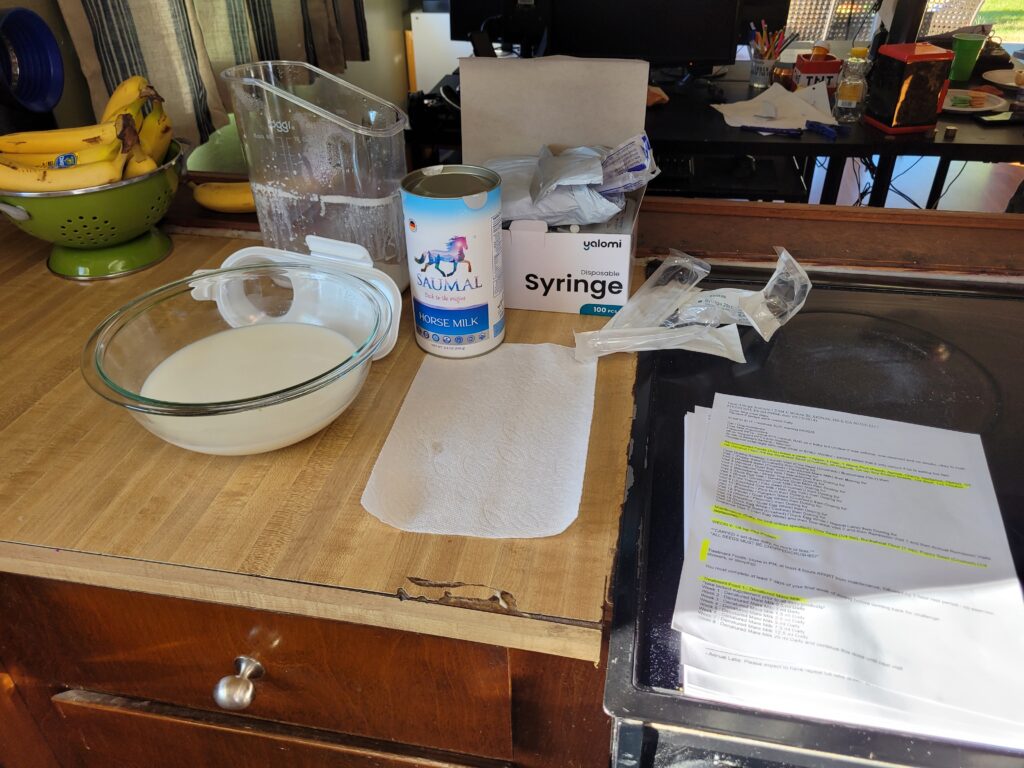
We source the mare’s milk for Eli’s treatment through the Food Allergy Institute, although you can order it online, but it is shipped from overseas. It is a powdered formula, and the first step we take is to reconstitute it with water.
Next, we boil the milk for three minutes. This changes the proteins in the milk, which changes how the immune system sees and reacts to it. In the picture below, I am getting ready to measure out the mare’s milk for the whole cycle between our two appointments. We begin with him drinking .5ml, and will work our way up to 20ml by the time we head back to the Food Allergy Institute.
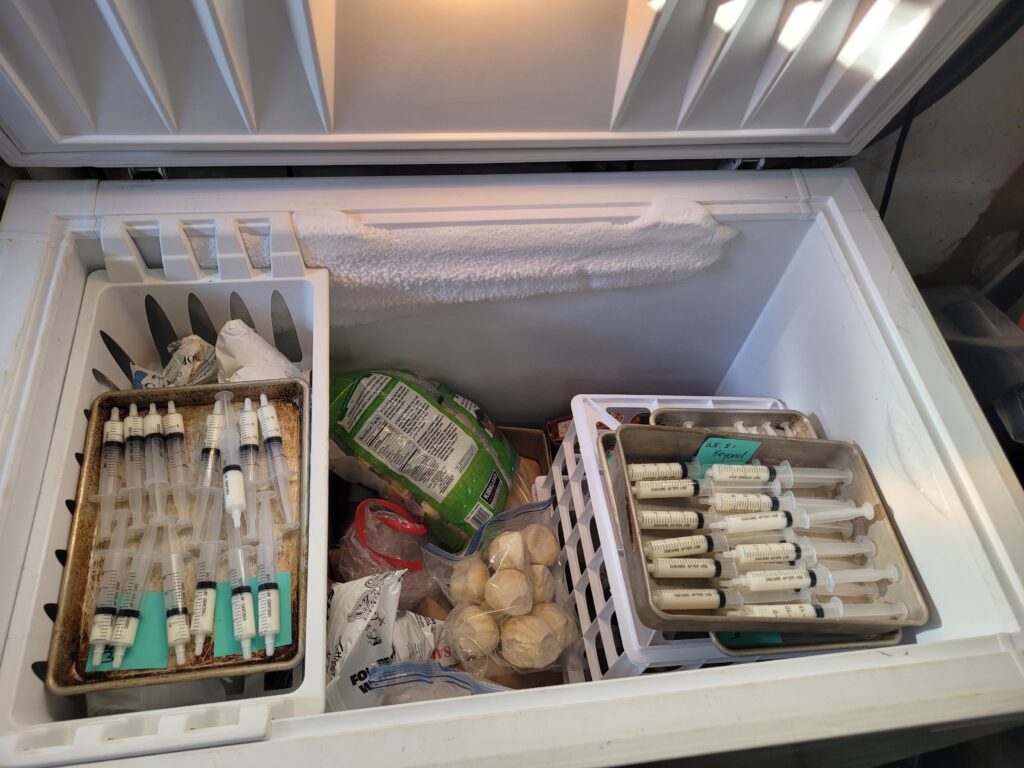
After preparing and measuring out the mare’s milk, I freeze each week’s worth in a gallon bag, and we are ready to go!
Eli says that it is “weirdly sweet and salty and gross”, we serve it with a good amount of strawberry syrup to cover up the taste and it does the trick. I did taste it, I was just so curious, after all, Eli has never even tasted cow’s milk. He is absolutely right, it is strangely game-y and sweet and salty, and definitely not something I would add to my repertoire of foods!
Thank you so much for taking us through Eli’s treatment. I had some idea of the difficulties for allergic kids having worked at the school but not to this extent. I am so very sorry Eli has to go through this but, my goodness, what a trooper! I will look forward to the next post❤️
Thank you so much for doing this. I had some idea what little peeps went through with these severe allergies having worked at the school but certainly not to this extent. I am so sorry Eli is having to deal with such a thing but what a trooper! And mare’s milk? Oh my! Like I said, what a trooper.