What does it mean to really include another person? We see the term inclusion thrown around a lot, at least in the education world that I inhabit. The goal of inclusion is to ensure that all people, regardless of disabilities, are able to be included. It is a simple, but very difficult goal.
I think the first step for many disabilities is what I like to call “cheap” inclusion, where people with a disability are told “you’re allowed to be here”. It is a wonderful first step. To be truthful, this is where most food allergy accommodations are at right now and we are thankful for this step, even though it is not really enough. Did you know that people with food allergies used to get kicked off of airplanes? Kicked out of places like Disneyland because they needed to bring their own food? Just being allowed to be in a space is the first step, and it is an important one.
It is always so tempting to stop at the cheap inclusion step, because it doesn’t cost us as much. We don’t really have to change, we just allow people to come, to be in the spaces we are in. It is tempting to believe it is enough.
The next step, however, is to stop and ask, “how can we include you? What would make you feel safe, what would help you to be able to show up and participate?” I think the most loving thing you can do if you want to include a person is not to try to figure out on your own how to include them, but instead to ask them. Ask them, and then listen, and then believe them. Sometimes we think helping out or including a person is taking over, but instead it is giving up control, it is admitting that you don’t know. That is the first step in earning trust.
When Eli first went to school, the dehumanizing part of the accommodation process was that the people who were in charge didn’t ask me any questions. They told me what they would do to accommodate my son, they didn’t ask about him at all. I remember having to interrupt a very long monologue from a school staff member and ask if I could tell them a little bit about Eli (including what he was actually allergic to!). They did listen, but then proceeded to continue to tell me what to do to keep my son safe, sometimes they even had wrong information. It kind of shocked me (not that they would have wrong information, kids like Eli are a rare and new thing, but that they wouldn’t ask me about him at all). If I could go back and give advice to the leaders of that meeting, it would be to start the meeting by asking about my son, asking me to tell you about how we keep him safe. No matter how much you think you may know because you’ve had a kid with an allergy in your school, a parent is going to know more. They live with it. They’ve seen the reactions, they’ve made the mistakes, they lived with it long before you and they will long after. The general feeling I got from them was that they were going to accommodate in the way they thought was best and I should just trust them and stay out of it. That isn’t how trust works though, is it?
In contrast, I have been unimaginably blessed by many people who stepped into the brave world of “I don’t know about food allergies, Beth, but I do want to be a part of including Eli, how do I do it?” and then listened to and believed me and did it.
There is my sister in law Katie and my nephew Cameron who, for reasons I can only explain as love, made Cameroon’s graduation party completely free of Eli’s allergens. There is my best friend and her mom who cleaned her whole house and ran every ingredient by me so Eli could attend his first ever party where everything was safe for him (and many subsequent times after that, but I will never forget the joy and freedom we both felt that day). My aunt who helped me develop an Eli friendly recipe for Nisu (a family tradition I thought I would lose). Our parents who learned along with us. My mom, who is still the only person who I trust wholly and completely to protect him like I do. My in-laws. who have to source ingredients even though they don’t live close to the wide variety of grocery stores that we do, but do it anyway. Another of my friends who finds him new, safe foods to try (we love you Angela!). The playgroup moms who just stepped in and made it safe for him to play and eat with all of their kids. My best friend and her kids, who just joined us and said “we’re doing this with you now.” I think of all of you almost every single day, I treasure your kindness in my heart. In a world where most people stop at “ you can show up”, you showed up for us instead.
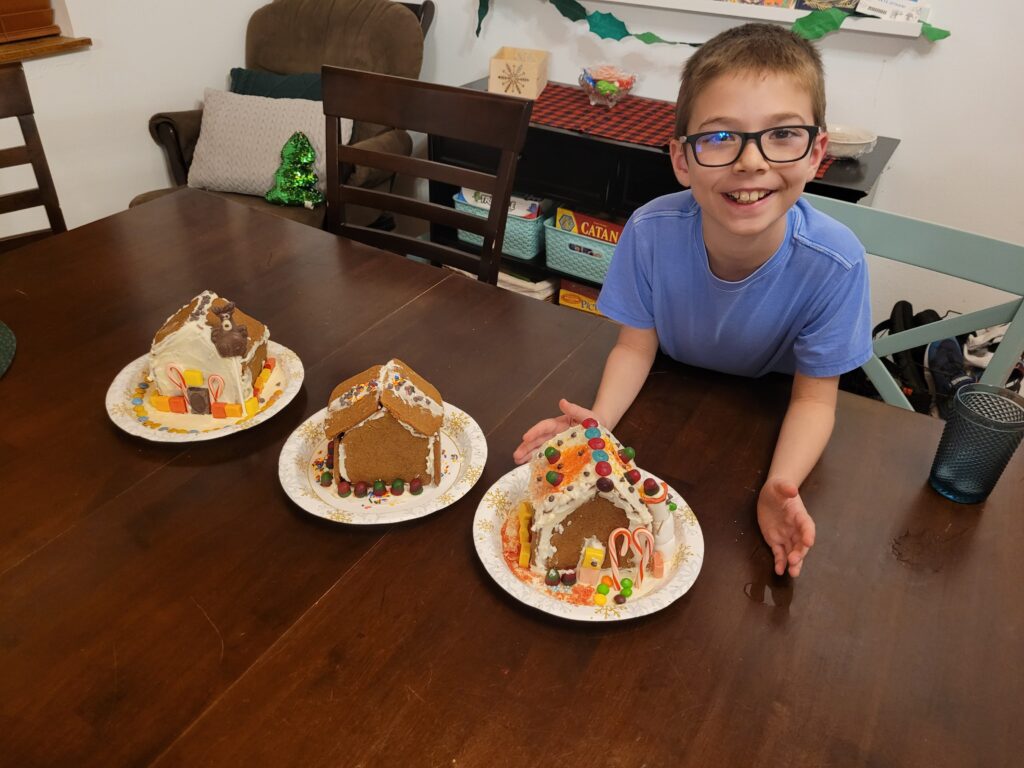
You see, real inclusion asked something from each of the people I named above. It cost them something. They gave up favorite foods, they deep cleaned their houses, they forced toddlers to wash their hands and mouths, they drove to many, many grocery stores to find safe ingredients. It is costly to include someone. It is inconvenient. To this day, anyone who wants to feed Eli something texts me the ingredient lists (my nieces are especially good about this, hi Ana and Amy!), they make sure they don’t have his allergens out when they are cooking for him, they wash dishes and wipe down counters, and show me how they do things so I can make sure they didn’t miss anything. It is inconvenient for them. I don’t really even know how to say thank you enough or in a way that conveys the tears in my eyes when I say how much it means to me. So I will say it with a Bible verse that my friends and family exemplify to me
“Greater love has no one than this, that he lays down his life for his friends”.
Each act of sacrifice has meant the world to our family. In a world where Eli is almost always unsafe, you have created safe places for him, havens amidst the storms.
Eli is one of the most loving people I have ever met. He tells me all of the time that he loves everyone, and I really do believe him. I think this is in part because of all of the love the people around him have stepped in to show him throughout his life. Because of the people in our lives who have and continue to, truly include him. We love you. We are thankful for you. Thank you for being brave. Thank you for giving something up for us. Thank you for not just telling us we could show up, but for making safe places for us instead.