
When we decided to do this program, we already knew we would be flying down to the Food Allergy Institute in Long Beach, CA every few months for appointments. We decided that, for the most part, we would trade off who went with Eli every other time. In this way, we are both able to be very involved and feel like we are on the same team. In the future, we hope to bring Steven down with us so he can see the clinic and experience an appointment with Eli, but we haven’t done that yet.
Adam, my husband, took Eli to his very first appointment. At this appointment they do blood draws and a skin prick test, go over his health history (every.single.detail.). I can honestly tell you that they asked me questions I had never thought about before, things like, does he eat shrimp? If so, about how much a week? Has he ever eaten buckwheat? And other interesting questions about food that I wasn’t really sure how to answer. I mean, yes, he eats shrimp, but not frequently enough to quantify an amount for every week!
Blood draws and skin prick tests done together are the standard for food allergy diagnosis. What is really surprising is that these tests are still not considered conclusive, as a matter of fact, a board certified allergist would never just test you for food allergies if you hadn’t been having reactions. For reasons no one is quite sure of, you can test as having an allergy to a food you eat every day safely. This is why the gold standard of food allergy diagnosis is actually eating and reacting to the food. The difference with these tests when done by the Food Allergy Institute is what they did with the data.
It took several months for them to develop a plan that is customized for Eli. The food allergy institute collects the data of their patients and runs it through AI, analyzing the many components of food allergy and comparing them to other patients, allowing them to prepare a plan. They have also analyzed food proteins and found foods with biosimilar proteins that are close but not exactly like the proteins in the food he is allergic to. For example, Mare’s milk shares some similar proteins to cow’s milk, but it doesn’t contain casein, so it is a fairly safe first milk to introduce to someone like Eli. He will move up a ladder of milks and yogurts (donkey, sheep, goat!), denatured to fresh, ending with fresh cow’s milk.
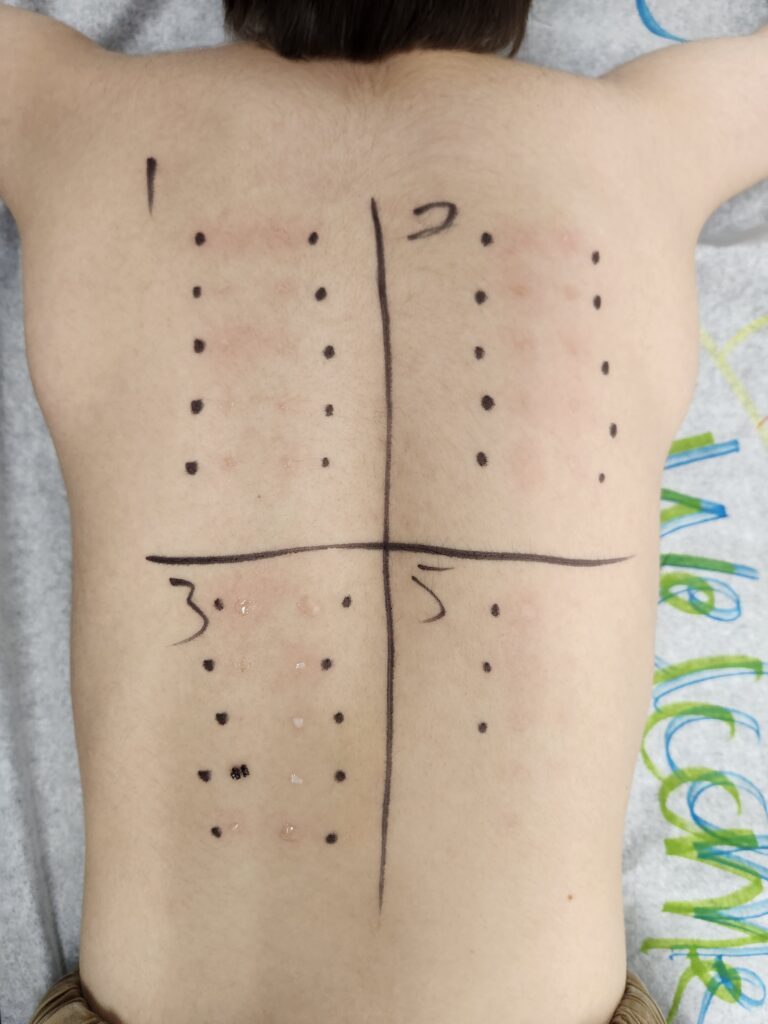
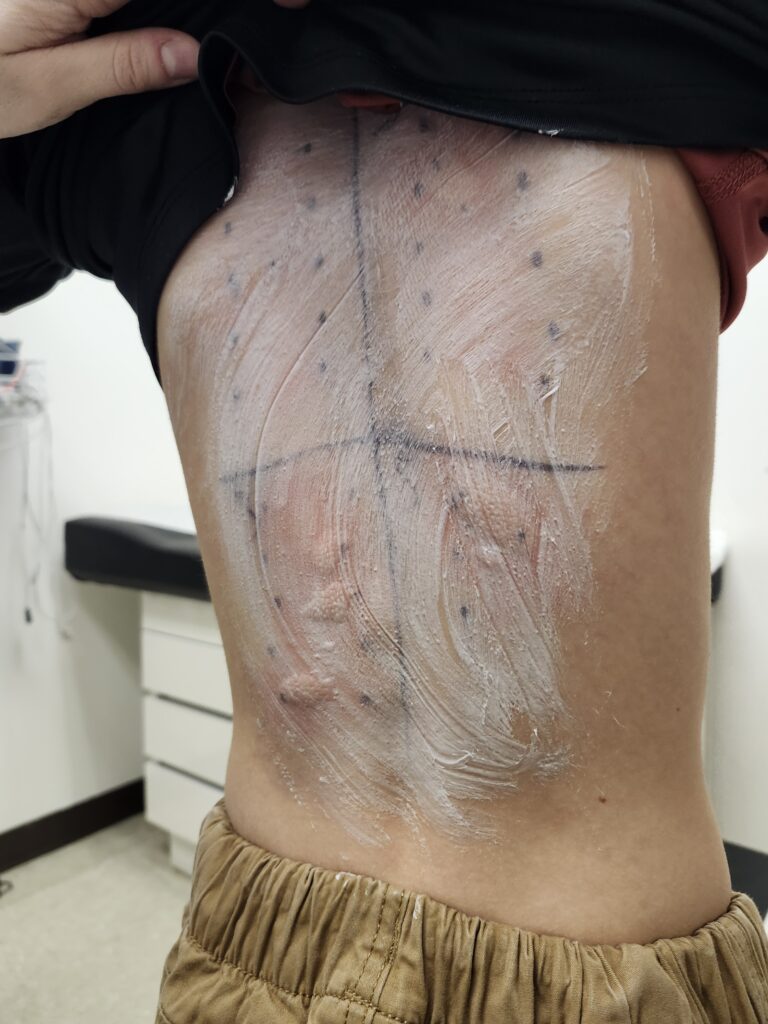
A side note on food allergy testing: There are companies and even some natural medicine practitioners who will run blood tests for food allergies- be wary of these. They often measure for IGG in your blood, which is not an indicator of food allergies or sensitivities. Board certified allergists measure your IGE levels, which are an indicator of food allergies, they then measure the results of the bloodwork against a skin prick test of the same allergens. A skin prick test is where very small amounts of allergens are put, typically on your back, for a short amount of time and then the reaction is measured (literally, with a ruler). This is Eli’s below. It is important that people do not just stop eating foods if they are not having reactions. It is unnecessary, but also seems to be driving an uptick in genuine food allergies. There seems to be a correlation between waiting to introduce allergenic foods to babies and developing food allergies. It is not a one to one causation, but it certainly hasn’t helped. A good example is that by blood test, Eli should be allergic to peanuts. However, he eats them all of the time and has never had even a slight reaction! So he just keeps eating them, and they are safe.
Wow! Thanks for educating us. I had no idea , and Steve and Mark have allergies but so minor compared to this.